
Understanding the Difference Between Mood vs. Emotion
I previously wrote about emotional mastery—the ability to work with your emotions, both uplifting and difficult, in ways that foster vitality, growth, and a healthy connection with yourself and others.
But emotions are only part of the picture. To truly master how we feel, we also need to understand moods.
Moods may seem like background states, but in reality, they quietly steer much of how we think, act, and relate. Learning to recognize and work with them is just as important as managing emotions.
Emotions and Moods: Key Differences
Although emotions and moods overlap, there are differences worth noting.
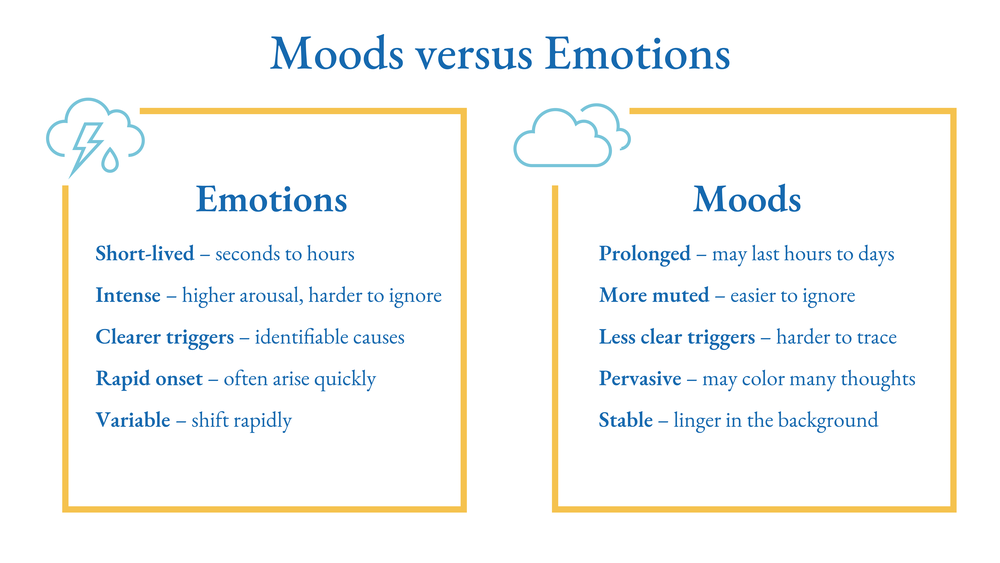
Emotions are generally briefer and often easier to connect to a cause. Fear after a loud crash, joy from good news, or embarrassment after an awkward moment—these tend to arise quickly in response to how we interpret events.
Moods, on the other hand, are usually more prolonged and less clearly tied to a single trigger. You might feel irritable for much of the morning without knowing why, or notice yourself upbeat and lighthearted throughout a weekend without any obvious reason.
While emotions can sometimes linger and moods can shift quickly, these general patterns help explain why emotions feel sharp and immediate, while moods more often form the backdrop of our daily experience.
Why Moods Matter
We often underestimate how much moods shape our lives. They influence how we think, how we relate, and how we act. While thoughts and emotions can certainly trigger moods, the reverse is also true: our moods can set the stage for everything else.
Moods Shape Our Thinking
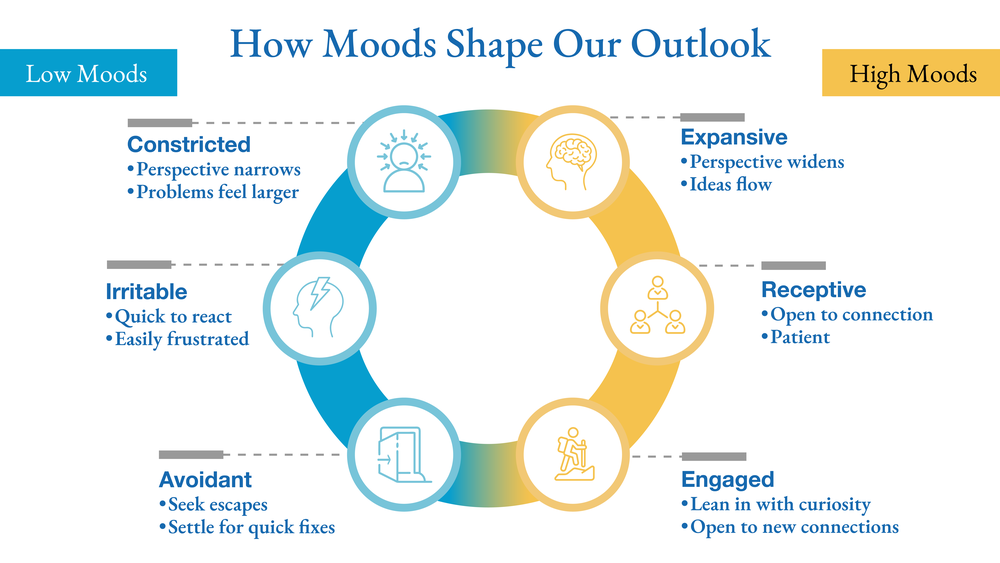
In a positive mood, our perspective widens. We think more creatively, feel more optimistic, and can keep problems in proportion.
In a low mood, perspective narrows. Small irritations loom larger, problems seem heavier, and solutions harder to see.
Moods Shape Our Relationships
Moods also affect how we connect with others. In positive states, we’re more patient, forgiving, and open to connection.
In low moods, we may become more sensitive to criticism, quicker to take offense, or more inclined to withdraw.
Moods Shape Our Actions
Finally, moods influence what we choose to do. High moods encourage forward motion: we’re more likely to initiate a tough conversation, try something new, or take on a challenge with flexibility.
Low moods, on the other hand, often nudge us toward avoidance—postponing tasks, isolating ourselves, or reaching for quick fixes that provide short-term comfort but little long-term benefit.
In short, moods are not just background feelings. They are quiet forces shaping our outlook, our behavior, and the meaning we attach to daily experiences.
What Shapes Our Moods
The origin of our moods often feels puzzling. We may wake up irritable or unusually lighthearted without knowing why, which can make them seem harder to control. What makes this so is that our moods are bio-psychological in origin—shaped by the constant interplay of mind, body, and environment.
The Role of Thoughts
How we interpret situations has a powerful effect on mood. A traffic jam may feel irritating if you see it as “lost time,” or calming if you reframe it as “a chance to unwind with music.”
Longer-term thought patterns matter as well. Worry, pessimism, and self-criticism can steadily weigh a mood down, while gratitude, optimism, and self-compassion can just as reliably lift it.
The Role of Biology and Environment
Moods are also shaped by underlying rhythms and lifestyle factors. Sleep, nutrition, exercise, physical health, and even the time of day influence our baseline state.
You may feel more energetic and optimistic after a good night’s rest, or more irritable late in the afternoon when energy naturally dips. For some people, weather strongly affects mood; for others, diet, fitness, or the presence (or absence) of social connection plays a bigger role.
These influences may be subtle, but they form the backdrop against which our thoughts and feelings play out.
Thoughts and Biology in Tandem
Neither thoughts nor biology act alone—they constantly reinforce one another. A poor night’s sleep can make you more prone to negative thinking; a positive mindset can spark motivation and energy.
In simple terms: thoughts guide how we respond in the moment, while biology provides the underlying fuel that makes certain moods more likely. Recognizing this interplay is key to becoming more skillful in managing our moods.
Looking Ahead
Most people naturally focus on how their thoughts shape mood. What’s often overlooked is the quiet but powerful role of biology—how sleep, energy, exercise, and daily rhythms set the stage for how we feel.
Recognizing this opens the door to new, practical ways of managing moods. In the next blog, i’ll look at these biological foundations—especially the role of energy and tension—and see how understanding them can help us navigate daily life with greater steadiness, vitality, and control.