
Mindful Eating Can Pave the Way to Healthier Eating
We live in a world overflowing with advice on what to eat. Low-carb, high-protein, plant-based, intermittent fasting—the list never ends. But far less attention is paid to a different question: how we eat. This is the essence of mindful eating—and it may matter just as much as the food itself. The way we approach a meal shapes not only our health, but also our sense of pleasure and connection.
Years ago, I had a ritual of drinking a Diet Coke at work—never before 11:30 a.m., but always soon afterward. I’d look forward to the five-minute walk to the vending machine and then bringing the can back to my office. On more than one occasion, though, I’d look around for my soda only to see the empty can already in the trash. I had consumed the whole thing without even noticing, let alone enjoying it. I felt shortchanged.
Most of us have similar stories because we spend so much time in autopilot mode. But what if we could shift our approach? I think of eating as a spectrum—moving from mindless consumption to mindful gratitude.
The Four Levels of Mindful Eating
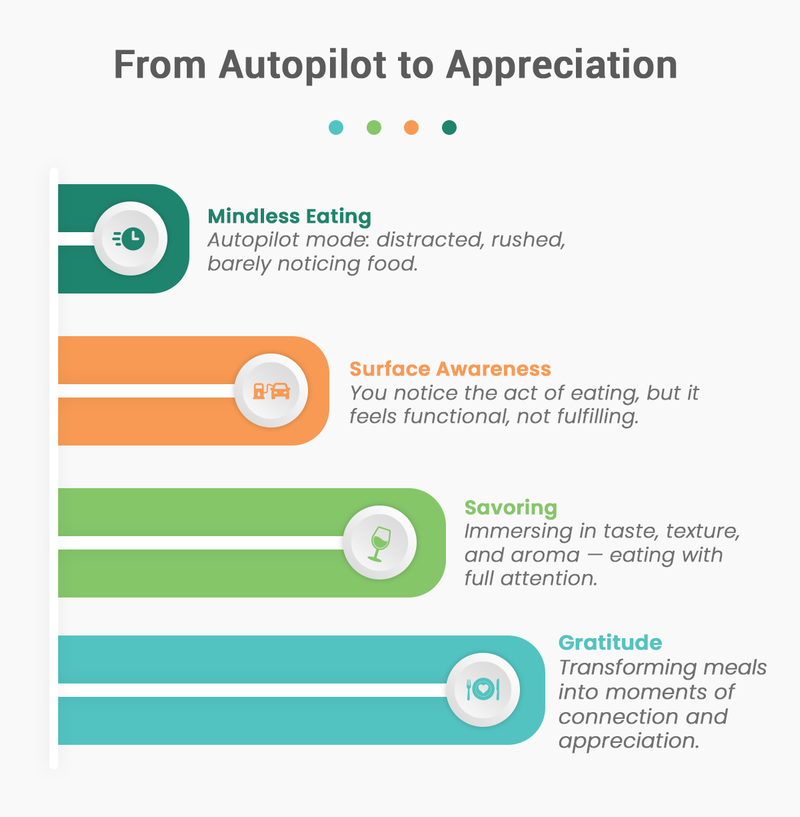
1. Mindless Eating
This is autopilot mode. You eat while scrolling through emails, watching TV, or rushing between errands. You finish the plate—sometimes the entire bag—and can’t remember half of it. It’s functional, but not fulfilling.
2. Surface Awareness
Here, you at least know you’re eating. You register flavors and notice when you’re full. But the act remains functional, almost like filling your car with gas: necessary and efficient, but not especially meaningful. There’s awareness, but little enjoyment.
3. Savoring
This is where the experience changes. Savoring means slowing down, setting distractions aside, and immersing yourself in the sensory richness of food. Think of a wine connoisseur—they don’t sip while multitasking. They study the aroma, let the flavors unfold, and fully appreciate the moment.
4. Gratitude
The highest level goes beyond pleasure. Gratitude for food—whether expressed in a blessing, a moment of silence, or simple appreciation for those who prepared it—turns eating into something sacred. It shifts a meal from being just for you to being part of something bigger.
The next time you sit down for a meal, ask yourself: Which level am I on right now?
Why Mindful Eating Matters for Health and Well-Being
Moving up this ladder isn’t about table manners. It has real benefits for health and well-being:
- Overeating: When we eat while distracted—scrolling, working, or watching TV—we tend to eat more without realizing it. The brain doesn’t fully register the meal, so we’re also more likely to snack later. Paying attention to taste and fullness cues helps you stop when you’re actually satisfied (1).
- Digestion: Digestion works best in the body’s “rest-and-digest” mode—when you’re calm and relaxed. Rushed or stressed eating can interfere with this process, leading to bloating or discomfort. By slowing down, chewing thoroughly, and pausing between bites, you help your body shift into this relaxed state, allowing digestion to work more smoothly (2).
- Satisfaction: When you savor food, you get more pleasure from less. Focusing on the flavors, textures, and aromas activates the brain’s reward pathways more fully, making the meal feel richer and more complete. Research shows that people who eat attentively not only enjoy their food more but also tend to eat less overall (3-4).
The Modern Paradox of Eating: Why Mindfulness Feels Hard
If savoring and gratitude feel so rewarding, why don’t we eat this way more often? The answer lies in the pull of biology, culture, and habit. Meals often get squeezed between tasks, so eating becomes background noise rather than a focal point. Phones, TV, and endless digital input further erode our attention, making it hard to give food our undivided focus.
And then there is culture: when everyone around us is eating while working, rushing between meetings, or grabbing food on the run, it feels normal to do the same.
Eating with intentionality is not as easy as it sounds. It requires just that—intention. A conscious choice to pause, even when the world around us doesn’t.
In a culture that rewards speed and multitasking, the real act of resistance—and of care—is presence.
A Simple Mindful Eating Practice to Try Today
Breaking a deeply ingrained habit can feel overwhelming, so start with one simple, powerful action:
Take one conscious pause before your first bite.
That’s it:
- Put the fork down.
- Take a breath.
- Notice the food—its colors, smells, textures.
- Then take that first bite with full attention.
On paper, it sounds easy. And it is—for one meal. The real test is whether you can return to it day after day. That’s when you’ll notice just how automatic eating has become for you, and how much effort it takes to break the pattern.
Even if you only succeed some of the time, each pause interrupts autopilot and pulls you one step closer to eating with more presence, more satisfaction, and more gratitude. Give it a try—you may be surprised by what you discover.
One pause. One breath. One bite.