By now, we’ve done three things.
We’ve redefined health as something that is built—not simply preserved.
We’ve identified vitality as the signal that reflects it.
And we’ve mapped the domains that shape it.
But one question remains:
If we already know what supports health, why is it so difficult to sustain the behaviors that build it?
This is where vitality takes on a new role.
It does not just reflect health—it helps drive it.
In this pillar, we explore how vitality closes the gap between knowing and doing—and why it may be one of the most powerful forces shaping how we live.
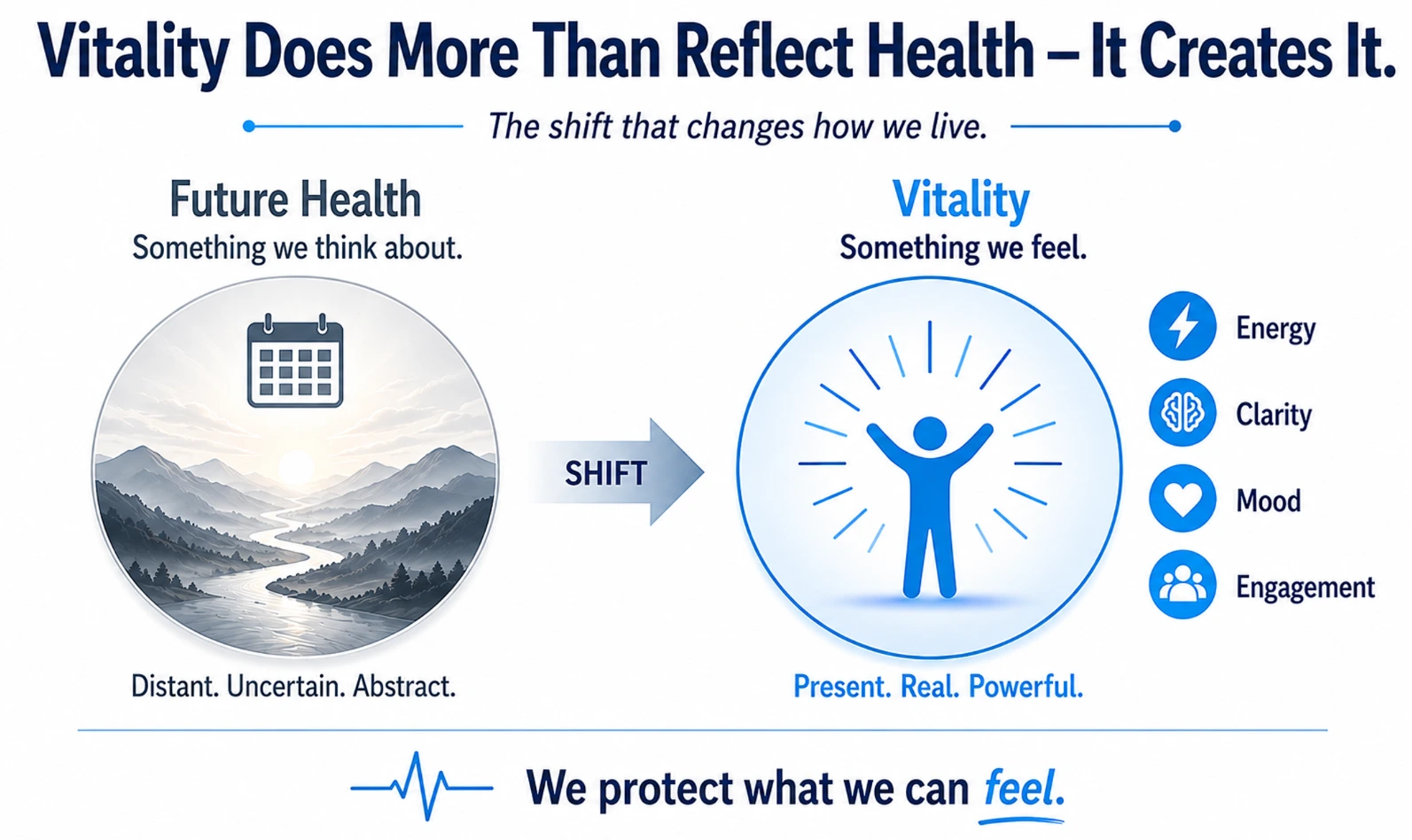
Because vitality doesn’t just reflect health—it quietly shapes the way we live. The next three essays will explain how.
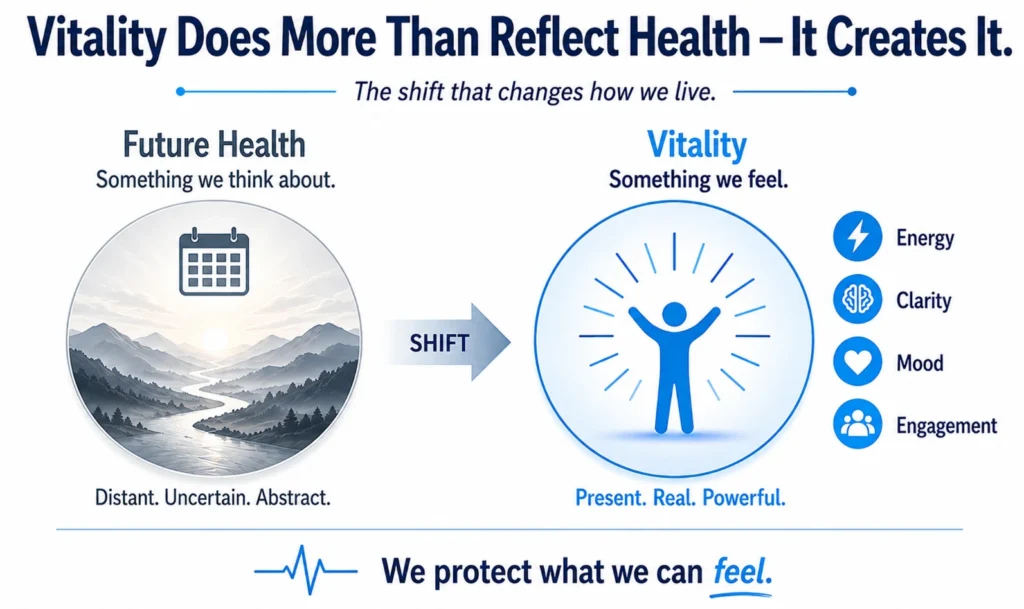
First, we examine why vitality has extraordinary motivational power. Most health advice focuses on preventing disease decades in the future. Vitality changes that equation because its rewards are immediate—felt as greater energy, clarity, and emotional balance. We are far more likely to protect what we can feel than what we can only imagine.
Second, we explore a paradox: although vitality is one of the most rewarding sensations we can experience, we often stop noticing it when it is strong. Only when vitality fades—through illness, stress, or gradual depletion—do we recognize the “invisible high” we were previously taking for granted.
Third, we examine how vitality shapes not just how much you can do, but how fully you are able to do it—and who you are while doing it. When vitality is strong, your thinking is clearer, your engagement deeper, and your capacity to act more consistent. When it is diminished, even your existing abilities become harder to access. In that sense, vitality is not simply a resource—it is a force that amplifies or constrains your potential.
Taken together, these ideas reveal something important:
Vitality is not merely a reflection of health.
It is one of the forces that creates it.