Asking a Simple Question
After my interest in the question What is health? began to deepen, I started asking others. I asked physicians colleagues — attendings, fellows, residents. Some smiled, as if it were a slightly philosophical or abstract question. Others offered thoughtful but scattered answers, usually some variation of the idea that health was “more than the absence of disease,” including physical, psychological, and social well-being.
Patients, friends, and other non-medical people answered much the same.
What struck me wasn’t consensus. It was vagueness.
There was no shared definition, no clear mental model. And in everyday life, almost no one seemed to think about health very much at all. Health wasn’t something people actively cultivated. It was something they assumed they had.
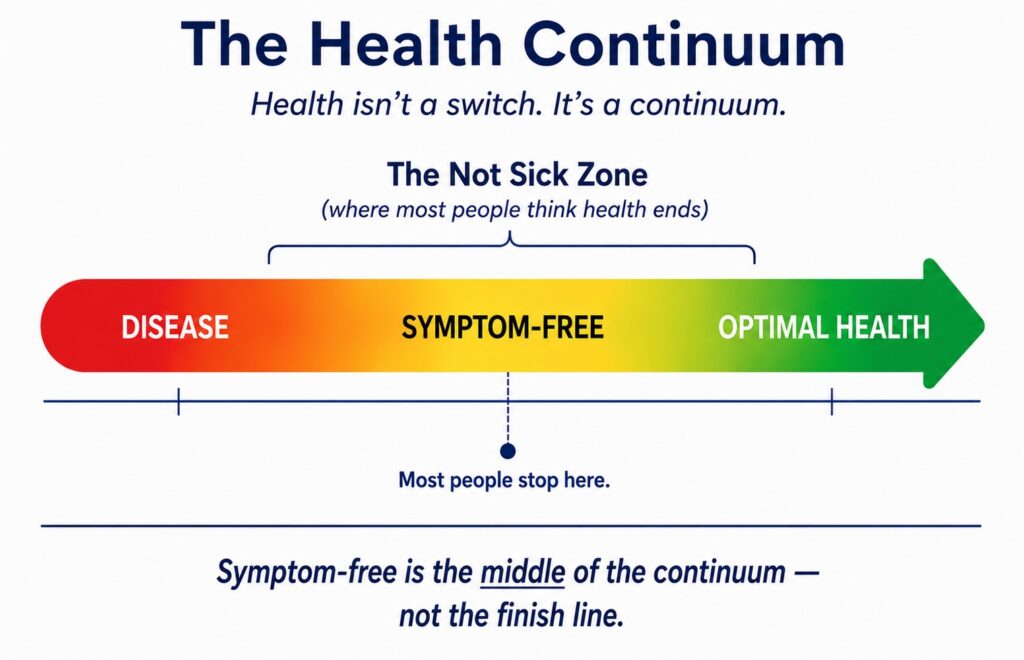
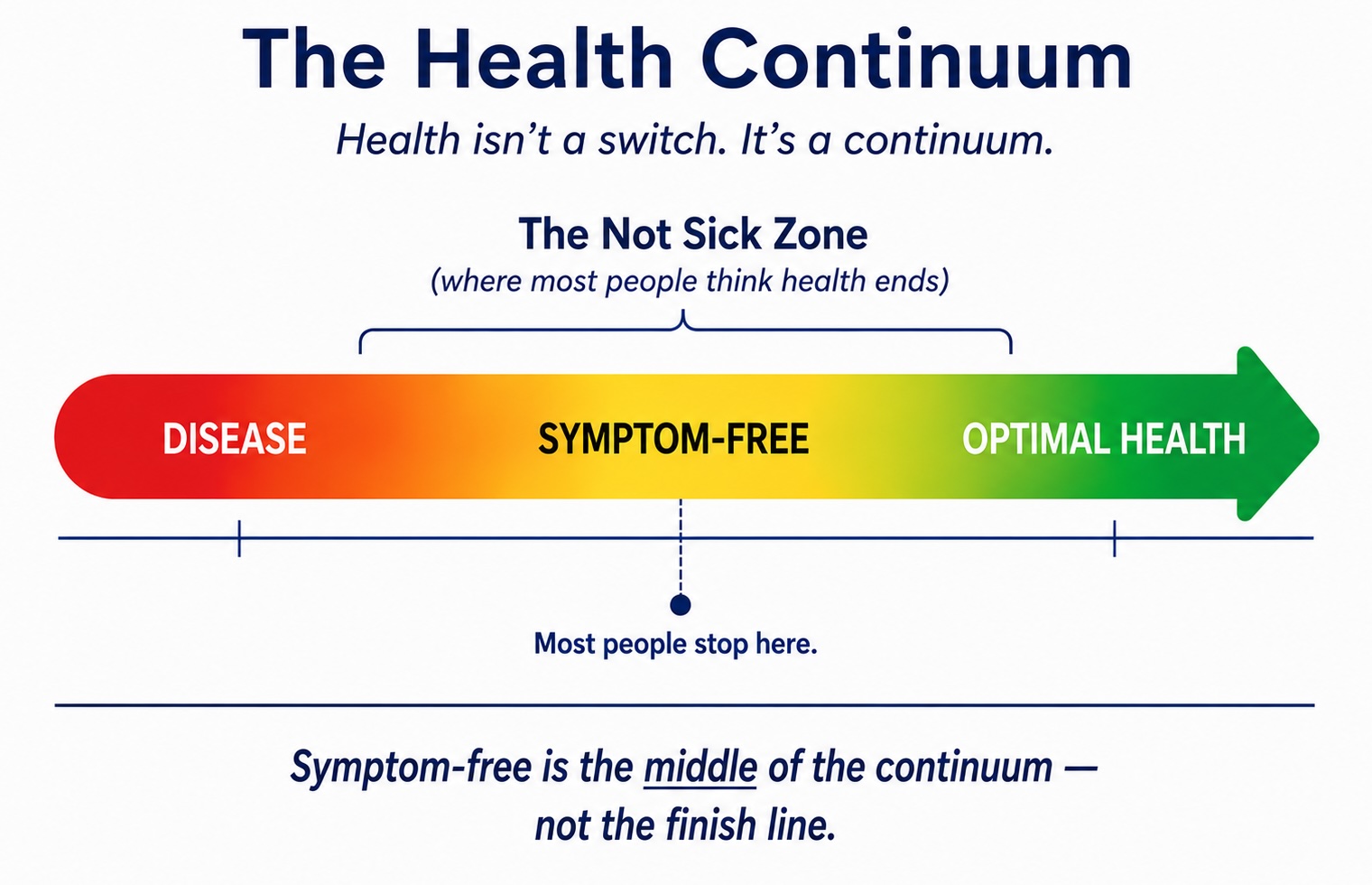
Over time, I began to notice a gap between how we talk about health and how we actually experience it. Intellectually, we say health is more than the absence of disease. Behaviorally, we live as if “no symptoms” means “I’m fine.”
That disconnect is surprisingly large — and surprisingly human.
The Things We Stop Seeing
Part of the explanation is simple: we take good things for granted.
Years ago, when I moved from the Northeast to Los Angeles, the weather felt miraculous. For the first few years, I appreciated it constantly. But gradually, I stopped noticing it. Occasionally, a visitor would comment and I would remember for a moment before forgetting again.
Health behaves the same way.
When your joints don’t hurt, your breathing is easy, your sleep is sound, and your energy is steady, it fades into the background. Only when something changes does it move into awareness.
In that sense, we experience health mostly through contrast.
Loud Signals, Quiet Strength
Think about the last time you really paid attention to your health. For most people, it wasn’t when everything feels good. It was when something felt wrong — back pain, fatigue, shortness of breath.
Pain and limitation demand attention. Quiet well-being does not. So we adopt an unconscious rule: if nothing hurts, I must be healthy.
But the absence of discomfort tells us very little about how strong or resilient we actually are. It simply tells us that nothing has broken yet.
There is a big difference between not broken and truly well.
The Slow Drift We Miss
There’s another, subtler problem. Much of health declines gradually.
Take muscle mass and strength as an example. Beginning as early as our thirties, we lose muscle at a rate of roughly 3–8 percent per decade. Strength and power decline even faster.
But because the changes are slow, we rarely notice them. We’re just a bit less quick on the tennis court. A bit more winded carrying groceries. We adapt. We adjust. We compensate. We call it aging.
Nothing feels dramatic enough to trigger alarm.
And so life subtly contracts.
By the time something feels unmistakably wrong, much of the change has already accumulated.
The Cost of Waiting
Put these tendencies together — taking health for granted, noticing only contrast, and missing slow, gradual decline — and a clear pattern begins to emerge. Most of us don’t build health. We assume it.
We recognize its value only after some of it is gone.
The problem isn’t that symptoms never appear. By the time they do, the process has often been unfolding quietly for years.
So we end up playing defense — reacting to problems rather than preventing them.
But if health erodes quietly and accumulates slowly, then waiting for symptoms means we’re already behind.
Which points to a deeper issue:
Before we can improve our health, we may first need to rethink what health actually is.
There is a big difference between not broken and truly well.