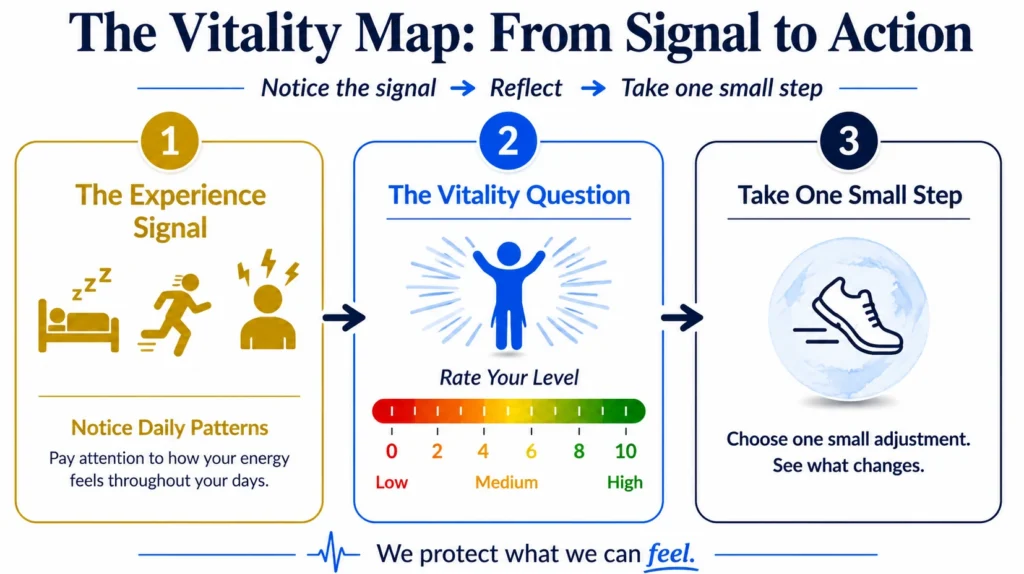
Recognizing vitality is a powerful first step—but by itself, it is not enough.
A signal only becomes useful when you can interpret it.
If your energy drops, what does it mean?
If it rises, what caused it?
Without a way to trace vitality back to its source, it remains a feeling rather than a guide.
In the first three pillars of this series, we introduced a different way of thinking about health. We explained how health is often defined too subjectively and reactively and explored a more objective perspective—letting the body itself reveal what strengthens or weakens it. We also introduced vitality as the missing signal that integrates these influences: the lived experience of how well our body and mind are functioning.
In this pillar, we introduce the Vitality Map—a framework for understanding where vitality comes from and how different areas of life shape it.
Once you can read that map, vitality becomes actionable.
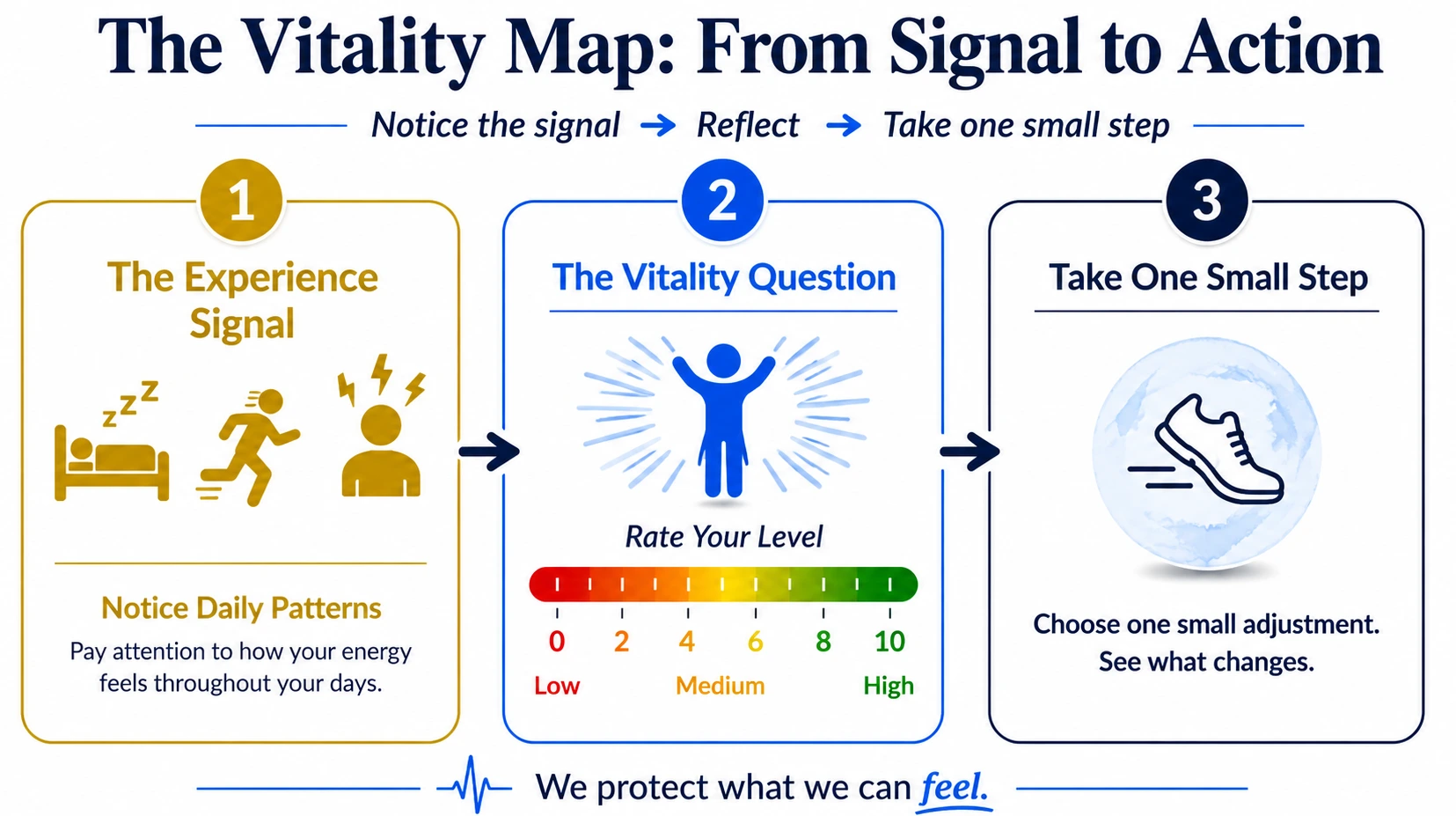
The first essay in this section explains why vitality often fades so gradually that we fail to notice it. By learning to observe subtle shifts in energy and engagement, we begin to recognize patterns in what restores vitality and what drains it. These patterns form the foundation of a personal Vitality Map.
The second essay introduces the Six Domains of Health and Vitality—physical health, mental vitality, emotional mastery, social connectivity, purposeful living, and stress management. These domains represent the major areas of life that most strongly influence both biological health and everyday vitality.
The final essay focuses on practical application. By using the Vitality Map to trace changes in energy back to their underlying domains, you can identify small, practical steps that help restore and strengthen vitality.
The Vitality Map provides something most discussions of health lack: a clear way to interpret the signals of our own biology. Instead of treating fatigue or low energy as vague complaints—or as inevitable consequences of aging—you begin to see them as meaningful signals pointing to specific areas of life that may need attention.